
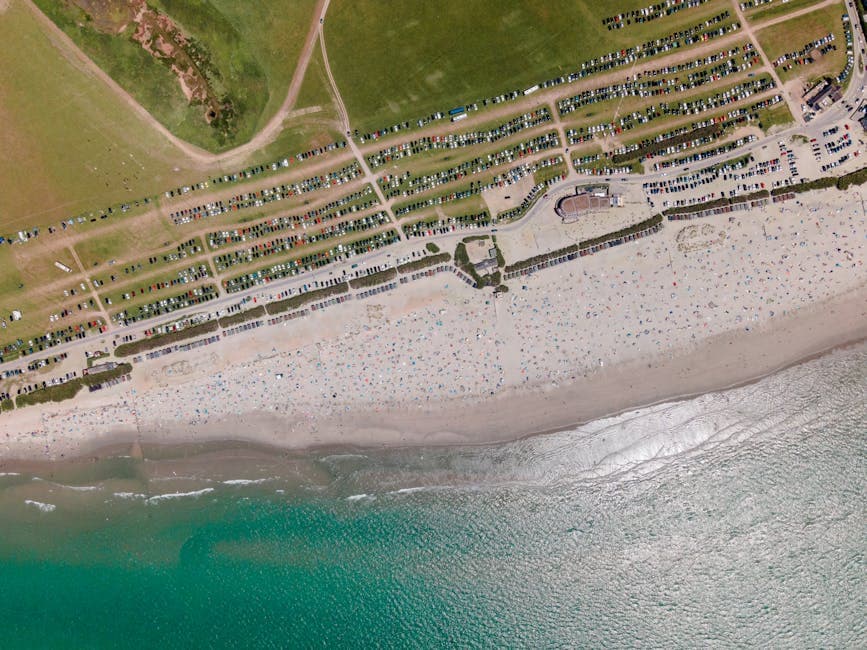
Bournemouth is one of the most popular bank holiday destinations in the UK, and that popularity comes with both rewards and challenges. The town comes alive during long weekends: restaurants fill up, the seafront buzzes, and there is genuinely something infectious about the atmosphere when thousands of people are making the most of an unexpected three days off.
But Bournemouth bank holidays also mean congested roads, packed beaches, and accommodation that disappears months in advance. Managing both sides of that equation is what this guide is about.
We manage holiday apartments in Bournemouth year-round, which means we see bank holiday check-ins and check-outs at all four of our neighbourhood locations. We also hear from guests who did it brilliantly and guests who were caught out. What follows is everything we have learned.
What are Bournemouth bank holiday weekends like?
The short answer: busy, but manageable if you know what you are doing.
Bournemouth's beaches can receive upwards of 100,000 visitors on a sunny bank holiday weekend. That is not a figure from a tourism brochure designed to make the town sound popular. It reflects genuine congestion on the A338 Spur Road, queues at every council car park from mid-morning, and a stretch of sand that looks from the clifftop more like a town square than a beach.
That said, the weather is not always sunny, and Bournemouth has enough space that dispersal across the 7-mile coastline and across inland areas means that even at peak times, quieter pockets exist.
Easter bank holiday (late March or April)
Easter is cooler and less crowded than summer bank holidays. The beach is walkable, restaurants have space, and the town has an early-season energy without the full July or August intensity. Expect mild temperatures (typically 10–14°C), some rain, and the beginning of the season for attractions that close over winter. Families with school-age children dominate the visitor profile.
May bank holidays (early May and late May)
The early May bank holiday tends to be quieter than late May (Whitsun). The Whitsun bank holiday, in particular, is the one that catches people off guard. It is nearly as busy as August but fewer visitors expect it. If you are flexible, early May gives you excellent value and far less congestion.
August bank holiday (last weekend of August)
This is the peak of everything. Maximum crowds, maximum prices, maximum demand for accommodation. Bournemouth Beach hosts tens of thousands daily. The promenade from Bournemouth Pier to Boscombe is shoulder-to-shoulder on fine days. Traffic on the A338 backs up from the Wessex Way. The town is, for better or worse, at full capacity.
If you choose August bank holiday, do not expect a quiet coastal retreat. Do expect energy, atmosphere, event programming (Bournemouth Air Festival runs in August, though not always on the bank holiday weekend itself), and a town operating at full throttle.

Honest Crowd Assessment
August bank holiday weekend is genuinely very busy. If you want a relaxed Bournemouth experience, early May or late September are significantly better. If you enjoy a buzzing seafront atmosphere and have booked well in advance, August bank holiday can be brilliant.
What is the ideal 3-day Bournemouth itinerary for a bank holiday?
Here is the framework we recommend to guests. It is flexible: adjust based on your neighbourhood, the weather, and how much you like crowds.
Friday: Arrive and settle in
Friday afternoon arrival is ideal for bank holiday weekends. Beating the main Saturday morning rush means you find parking, check in without queues, and can walk to a restaurant for dinner without competing for a table.
Late afternoon: Walk to the seafront to orientate yourself. Bournemouth Pier is the natural anchor point. Once you have seen the pier, you understand the town's geography. Walk the Lower Gardens if you are staying in or near the town centre.
Evening: Book a restaurant in advance. Do not assume you can walk in somewhere good on a Friday evening of a bank holiday weekend. Westbourne has some of the best independent dining in Bournemouth, and the 10–15 minute walk from central accommodation is worth it.
Saturday: Beach day and town
Saturday of a bank holiday is the peak day. Make peace with that or use it strategically.
Early morning: Get to the beach early. Before 9am, even on a bank holiday Saturday, the beach is calm. Take breakfast supplies from a local bakery or cook in your apartment and eat on the sand before the crowds arrive.
Mid-morning to early afternoon: This is when the beach fills. If you are with children who want to be in the water, stay. The atmosphere is fun. If you want a quieter swim, consider Southbourne beach (a 15-minute bus ride from central Bournemouth) which draws far fewer day-trippers than the main stretch.
Afternoon: The town centre around the pier gets very busy between 11am and 4pm. If this is when you want to browse shops or visit the pier, accept the crowds as part of the experience. Alternatively, this is the time to take a cliff walk. The clifftop above West Cliff offers sea views with a fraction of the beach foot traffic.
Evening: If you have booked dinner, you are sorted. If not, head out early (before 6:30pm) or late (after 8:30pm) to find space. The Triangle nightlife area gets lively from around 9pm.
Sunday: Day trip
Sunday of a bank holiday weekend is often the best day to leave Bournemouth for a few hours. The town is still busy but visitor numbers plateau, and destinations within an hour are accessible without the Friday/Saturday traffic.
The New Forest is 25 minutes by car and genuinely beautiful on a spring or summer morning. The Jurassic Coast (Lulworth Cove and Durdle Door) is 45 minutes. Poole Old Town is 20 minutes and has waterside cafes and Brownsea Island ferries.

For a car-free option, Poole is accessible by train in 12 minutes from Bournemouth station.
Check our bank holiday day trip ideas for detailed route and timing suggestions.
Monday: Morning in Bournemouth, early afternoon departure
Bank holiday Monday rewards early risers. The crowds of the weekend begin to thin from mid-morning as some visitors head home.
Morning: Hengistbury Head is the ideal Monday morning walk. The 2.5-mile circular route from the Southbourne car park takes under two hours and gives you spectacular views over Christchurch Harbour and back towards Bournemouth's skyline. Arrive by 8:30–9am to find parking and avoid the growing queues later in the morning.
Departure timing: Leave by 2pm on Monday if driving home via the M27 or A338. The worst traffic builds from late afternoon. Post-5pm on bank holiday Monday is notoriously slow on the M3 and M27. If you leave at 2pm, you gain a significant head start over the evening exodus.
If your departure is flexible and you can delay to Tuesday morning, the roads are dramatically quieter.
How early should you book for a bank holiday weekend?
For August bank holiday: book at least three to four months in advance. Good apartments let for this weekend as early as January for the same summer. By April or May, the best options in the best locations will be gone.
For Whitsun (late May bank holiday): two to three months. This weekend is underestimated by many visitors who leave it late.
For early May: six to eight weeks is usually sufficient, though popular properties with parking or premium locations book earlier.
For Easter: six to eight weeks, with the caveat that Easter's date varies. Early Easter weekends (late March) tend to be less in demand than Easter in mid-April.
Last-minute bank holiday bookings
It is not impossible to book a last-minute bank holiday break in Bournemouth, but your options will be significantly reduced. What tends to be available at short notice:
- Cancellations from other guests (worth checking booking platforms directly)
- Properties in less central locations (Boscombe and Southbourne often have more late availability than the town centre)
- Off-peak within the weekend: a Friday night arrival with Saturday night departure
The savings case for booking early
Properties typically apply peak-season rates for bank holiday weekends. The rate difference between a booking made in January versus May for an August bank holiday apartment can be meaningful. More importantly, the best-located properties simply do not exist as an option if you book late.
Booking Lead Times
For August bank holiday, treat it like peak July or August and book in January or February. For all other bank holidays, six to eight weeks should secure what you need, but don't test that timeline with a popular property.
How do you beat the bank holiday crowds in Bournemouth?
This is the question we hear most from returning guests, and the honest answer is that you do not beat the crowds by avoiding Bournemouth. You beat them by knowing where to look.
Use Southbourne instead of the main beach
Southbourne beach is quieter than the central beach for a structural reason: it is further from the main car parks and train station, so day-trippers default to the central stretch. Southbourne has the same Blue Flag sand and cleaner water, with a fraction of the August bank holiday footfall. The Fisherman's Walk cliff path between Southbourne and Boscombe adds an excellent morning or evening walk to the beach trip.
Time your beach visit
The promenade and beaches are at maximum capacity between 11am and 4pm. Early morning (before 9am) or late afternoon (after 5pm) give you a fundamentally different experience. The golden-hour light on the beach on a summer evening is as good as anything Bournemouth offers.
Book restaurants in advance. All of them.
This sounds obvious, but many visitors book accommodation well ahead and then assume restaurants will be fine on arrival. They will not be, at least not the places you actually want to eat. Book Friday and Saturday dinner at the same time as your accommodation.
Parking strategy
For visitors with cars, the council car parks at central Bournemouth fill by 9:30–10am on sunny bank holiday weekends. If you are not planning to leave the car in one place for the whole stay, consider:
- West Cliff car park: fills slightly later than the beach-level car parks
- Pokesdown and Boscombe: free street parking is more available east of the town centre
- Train or bus in for day trips: Bournemouth station is served regularly and parking at the station is cheaper than beach-level car parks
Explore inland Bournemouth

The town centre and seafront bear the brunt of bank holiday crowds, but inland Bournemouth (the Upper Gardens, Bourne Stream walk, Westbourne village) is significantly quieter even at peak times. The Bourne Stream walk from the seafront up through the gardens to Coy Pond covers nearly two miles through green space and is one of Bournemouth's genuine pleasures at any time of year.
The Russell-Cotes Art Gallery and Museum on East Cliff offers free entry and is rarely crowded even during busy weekends. It is one of Dorset's genuinely underappreciated cultural sites and worth two hours of any bank holiday itinerary.
A Bournemouth bank holiday weekend, approached with some preparation, is an excellent short break. The town has enough to keep a group of any composition entertained across three days, the coastal setting is genuinely beautiful, and the atmosphere during busy periods has its own energy.
The guests who enjoy it most are those who came with a plan, booked ahead, and were willing to wake up slightly earlier than usual for beach time. The guests who struggled were those who expected a quiet seaside escape on one of the busiest weekends of the year.
We manage properties in each of Bournemouth's main visitor neighbourhoods. Check bank holiday availability and we will do our best to match you to the right location for your group.
For your first bank holiday visit, our first-time visitor guide covers the essential orientation information to make the most of the town.
Book Your Bank Holiday Apartment
Our Bournemouth apartments are available across town centre, West Cliff, Boscombe, and Southbourne. Check availability for your bank holiday dates early. These weekends book fast.
Browse Properties