
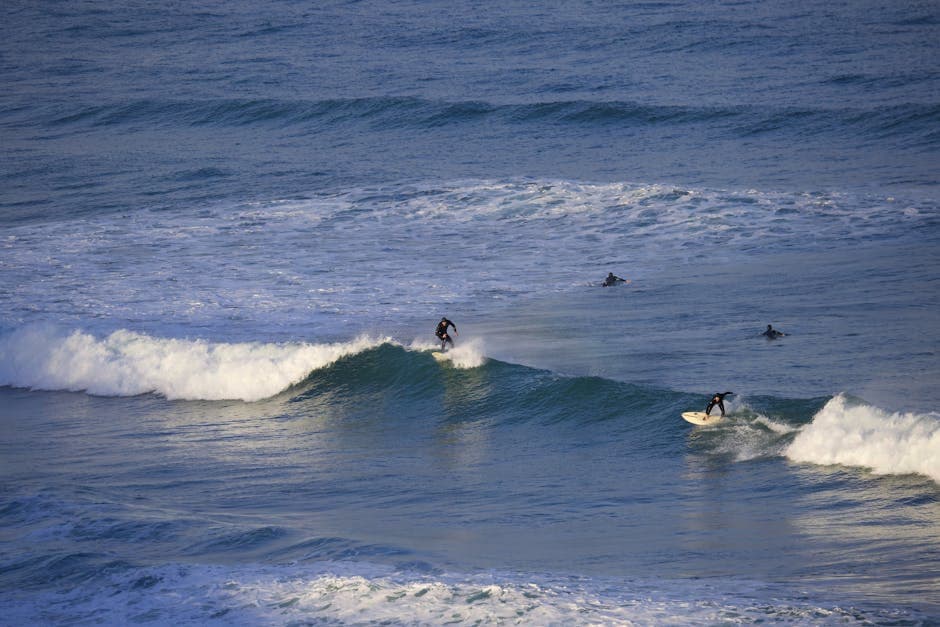
The honest answer to whether you can surf in Bournemouth is yes, but with an important qualifier. The south coast of England is not the Atlantic coast of Cornwall. The English Channel does not produce the consistent, powerful swell that the north Cornish coast sees from September through to April, and nobody should arrive at Boscombe expecting Fistral Beach. What Bournemouth does offer is accessible, learner-friendly surf on the right days, an artificial reef designed to improve those conditions, and a surf culture that has been quietly developing since the reef was installed in 2009. Knowing what to expect is the difference between a genuinely enjoyable surf session and a disappointment.
Can you actually surf in Bournemouth?
Yes, you can surf in Bournemouth. The town has surf schools that have been operating commercially for over a decade, and on the right day, particularly in autumn and winter when south-westerly Atlantic swells push into the Channel, waves at Boscombe are rideable and worthwhile.
The key qualifications are these:
Consistency is lower than Atlantic-facing coasts. Bournemouth faces south, which means it relies on swells generated in the Channel or Atlantic swells that wrap around the Purbeck coast. These are less frequent and generally smaller than what hits the north Devon or north Cornwall coast. In summer, the sea is often flat or close to it. Glassy summer conditions that look beautiful for swimming are typically useless for surfing.
Bodyboarding is more consistently achievable. The wave energy on the south coast is often better suited to bodyboarding than standup surfing; the waves break more softly and are generally shorter. For a beginner or someone on a surf holiday who wants guaranteed water time, bodyboarding is a more realistic expectation in the summer months.
Autumn and winter produce the best surf. September to February is when south coast conditions are at their best for surfing. South-westerly and southerly swells, combined with the right wind direction (offshore, which comes from the north or north-east in this part of the country), can produce decent surf at Boscombe. Winter sessions mean cold water: a 4/3mm wetsuit minimum, with booties and gloves in December through February.
The best resources for checking conditions before you paddle out are Magicseaweed (MSW) and Surfline, both of which have Bournemouth/Boscombe spots in their forecast databases. Check swell height, swell period, and wind direction together rather than swell alone. A 1.5 metre swell with a 12-second period is significantly better than 2 metres with a 6-second period.
What is the Boscombe Surf Reef and does it work?
Boscombe Surf Reef was completed in 2009 and was, at the time of construction, Europe's first artificial surf reef. The concept was straightforward: install a sand-filled geotextile structure on the seabed at Boscombe beach to focus wave energy and produce consistently better waves than the otherwise flat sandy bottom would allow.
The reef cost approximately £3 million to build and was expected to transform Boscombe into a surf destination, boost local tourism, and regenerate what was then a somewhat rundown stretch of the Bournemouth seafront.
The reality
The results have been mixed, and being honest about this is more useful than the promotional language that surrounded the reef's opening. The reef has produced good waves on its day, and locals who have surfed Boscombe regularly over the past fifteen years will confirm that there are sessions where the reef genuinely helps, focusing wave energy and producing a more defined peak than the rest of the beach. On those days, it works.
However, the reef has also had significant problems. Part of the structure shifted and partially collapsed within a few years of installation, which reduced its effectiveness and required remedial work. The engineering proved more complex than anticipated, and the reef's performance has never consistently matched the pre-build projections. On many days, particularly in summer with small swell, the reef makes little discernible difference.
Current state
The reef remains in place and is visible from the beach at low tide. It continues to function on its better days, and the area directly in front of it is still where the better waves tend to be at Boscombe. Surf schools use the reef area as their primary teaching location. But visitors should approach the Boscombe Surf Reef as a feature that improves already reasonable conditions rather than a wave generator that creates surf where there would otherwise be none.
The Boscombe regeneration project that accompanied the reef (the Coastal Activity Park, the improved beach facilities, the investment in the surrounding area) has been considerably more successful than the reef itself, and has genuinely transformed Boscombe beach into a well-equipped activity hub.
Checking Reef Conditions
The Bournemouth/Boscombe surf spot on Magicseaweed includes annotations about reef performance under different swell conditions. As a general guide, the reef shows best with a southerly swell of 1 metre or more and a period of at least 10 seconds. Anything below that and the beach tends to be marginal regardless.
Where are the best surf spots near Bournemouth?
Boscombe (primary surf spot)
Boscombe beach, particularly the area in front of and slightly east of the surf reef, is the main surfing location in the Bournemouth area. The Coastal Activity Park at Boscombe provides facilities (showers, changing rooms, board hire, and the surf school base) making it the practical starting point for anyone visiting specifically to surf. The Boscombe apartments near the surf put you within a few minutes' walk of the beach.
Best conditions: southerly or south-westerly swell 0.8 metres and above, northerly (offshore) wind, mid-tide rising. The reef area works better on the pushing tide.
Bournemouth Pier
The pier creates a small amount of protection on its eastern side, which can occasionally produce slightly different wave characteristics to the open beach. On small days, there can be a wave around the pier end. This is not a reliable or particularly good surf spot, more an occasional curiosity than a destination, but worth noting if you are walking the pier and the swell is small.
Highcliffe Beach
Highcliffe is around seven miles east of Bournemouth, beyond Christchurch Harbour. The beach faces slightly more open water than Boscombe and can pick up marginally more swell on easterly-tracking swells. It is a less crowded alternative to Boscombe and has a pleasant beach environment. The waves are similar in character to Boscombe: soft beachbreak, better for bodyboarding and beginners than experienced surfers. There are no dedicated surf facilities at Highcliffe in the way there are at Boscombe.
Kimmeridge Bay (day trip)
For anyone staying in Bournemouth who wants to experience proper reef surfing on the Dorset coast, Kimmeridge Bay is worth a day trip. It is approximately forty-five minutes by car, on the Jurassic Coast west of Swanage. Kimmeridge is a reef break (waves break over a rock ledge rather than a sand bottom), which produces a completely different wave character to Boscombe. It requires a bigger swell to work, but when it is on, it is significantly better quality than anything in Bournemouth. Note that Kimmeridge Bay is a Site of Special Scientific Interest (SSSI), and there is a toll road to access the bay. Check conditions carefully before making the drive, as an unrewarding flat day at Kimmeridge is a longer wasted journey than a flat day at Boscombe.
Where can you take surf lessons in Bournemouth?
Bournemouth Surf School
Bournemouth Surf School is the most established provider in the area and operates primarily from Boscombe beach.
Prices for group lessons run at approximately £40-50 per person for a two-hour session. Private lessons are around £80-100 per person. Kids' lessons are available for ages 8 and up. Booking online is required for weekends; midweek sessions can sometimes be arranged with less notice in the off-season.
A beginner's two-hour group lesson at Boscombe will typically get you from zero experience to catching whitewater (broken) waves by the end of the session. That is a realistic and achievable outcome in the conditions Bournemouth normally provides. Progressing to green (unbroken) wave surfing will take multiple sessions.
The Coastal Activity Park
The Coastal Activity Park at Boscombe beach is the activity hub for the area. While it is not exclusively a surf school, it coordinates several watersports activities from its base, and the surf school partners operate in and around the facility. The park also provides changing facilities, showers, and equipment storage, which is useful if you are making multiple visits during a week-long stay.
What to expect as a beginner
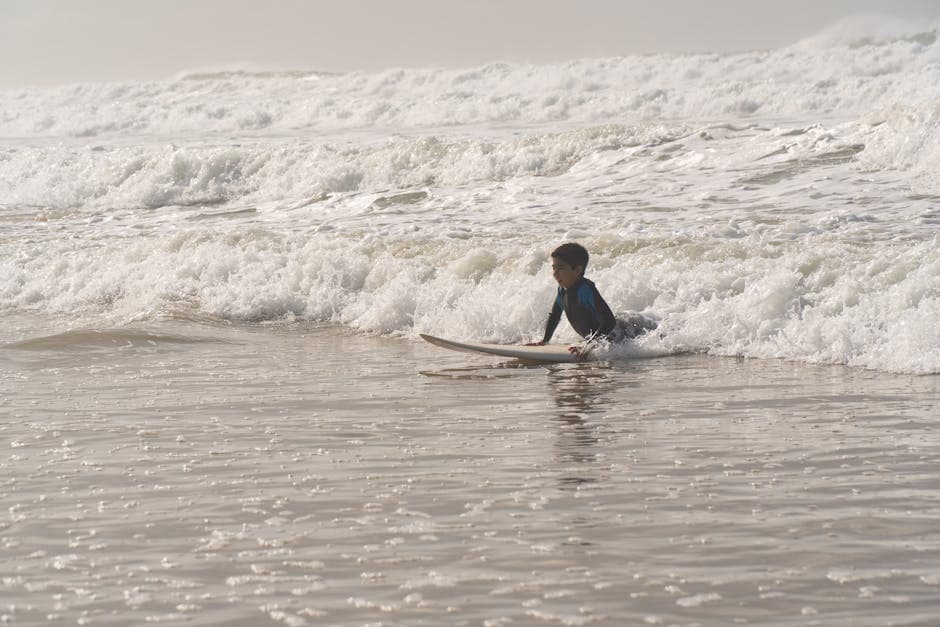
A first surf lesson at Boscombe on a typical day will involve twenty to thirty minutes of beach instruction (how to pop up, where to position yourself on the board, how waves work), followed by ninety minutes in the water in the whitewater zone. The instructors stay in the water with you, and the soft, rolling whitewater at Boscombe is genuinely good for learning. It is forgiving and consistent enough that most beginners catch their first wave within the first half hour in the water.
The experience is significantly better in May, June, September, and October than in peak summer July and August, when the beaches are crowded and the instructor-to-student ratio can feel stretched. Spring and early autumn are when the instructors have more time per student and the water temperature is still reasonable (16-18 degrees Celsius in September, dropping to 12-13 by November).
Best Time to Book Lessons
May and June offer the best combination of manageable conditions, reasonable water temperature, and smaller crowds. September is the best single month for surfing in Bournemouth: the water is still warm from summer, autumn swells begin to arrive, and the beach is significantly quieter than peak season.
Where do you hire surfboards and wetsuits in Bournemouth?
Boscombe hire shops
Board and wetsuit hire is available at several points along Boscombe beach, most of them operating from the Coastal Activity Park area or adjacent to it.
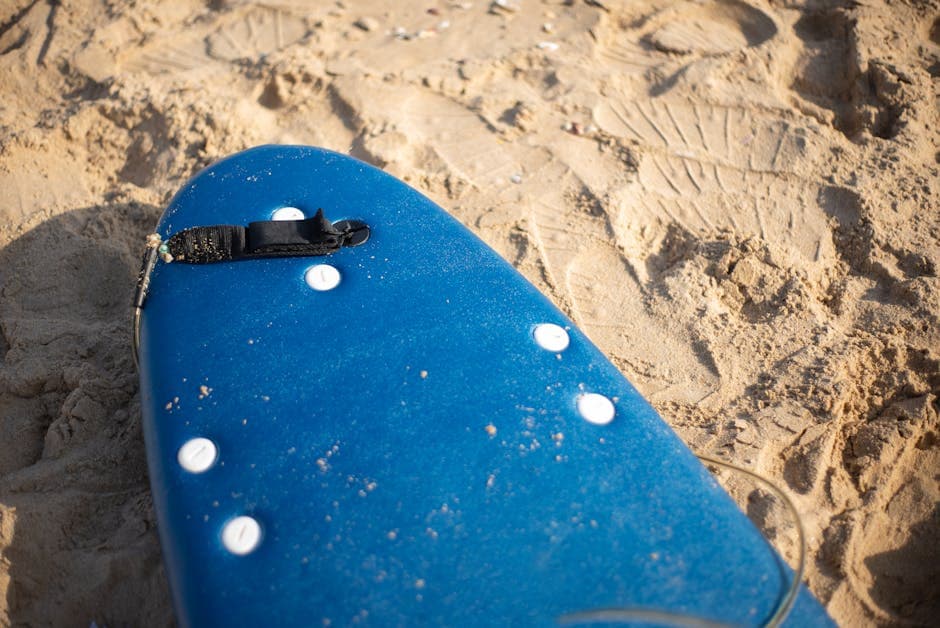
- Softboard (foam, ideal for beginners): £15-20 per half day, £25-30 per full day
- Longboard or mid-length: £20-25 per half day, £30-40 per full day
- Wetsuit hire: £5-10 per session, often included in board hire packages
- Bodyboard hire: £8-12 per half day
Summer hire season runs from approximately April to October. Out of season, availability is reduced and it is worth calling ahead. Equipment quality varies between operators, and the hire boards at the surf school tend to be better maintained than some of the independent beach hire points.
What to expect from hire equipment
Hire boards are generally adequate for what they are used for: mostly beginner soft-top boards and a small selection of hardboards for more experienced surfers. They are not going to be the latest high-performance equipment, but for the conditions at Boscombe and for learning purposes, they are fine.
If you are staying for a week and planning to surf most days, some people find it makes financial sense to buy a second-hand soft-top board from one of the local shops rather than hire. A second-hand 8-foot soft-top can be found for £80-120 and resold at the end of the week for a similar amount. This only works if you have transport and space to store it, which is possible if you are staying in one of our Boscombe apartments near the surf rather than at a hotel.
Wetsuit guidance
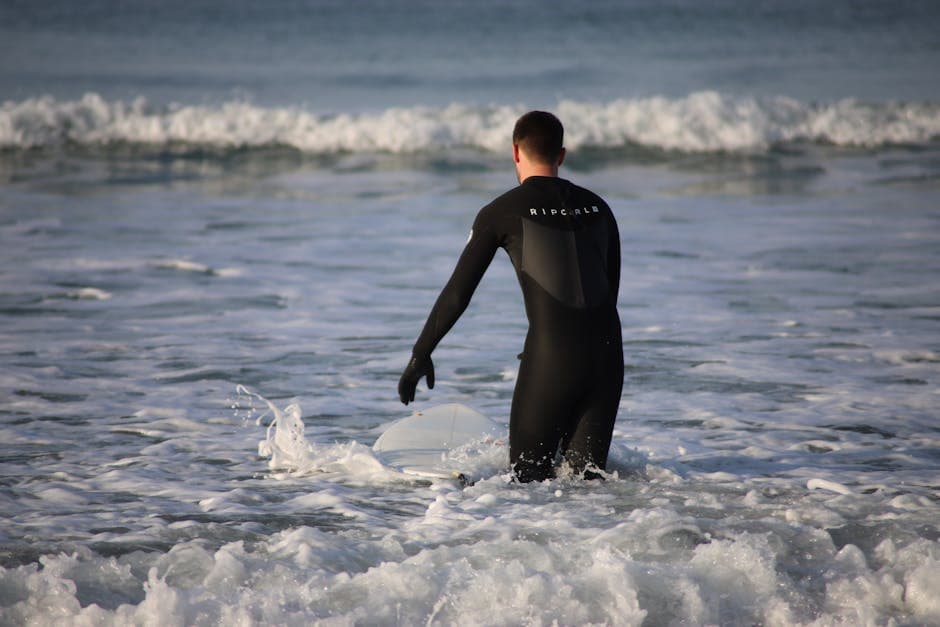
For summer surfing (June to September), a 3/2mm full wetsuit is comfortable at most times, with some people opting for a shorty in July and August when water temperatures peak around 18-20 degrees Celsius. From October onward, a 4/3mm is the standard, with a 5/4/3mm or thick 4/3mm plus gloves and booties advisable from December to February. If you are bringing your own wetsuit, err toward warmer rather than cooler. It is easy to overheat briefly but uncomfortable to be cold throughout a session.
Stay Near Boscombe Beach
Our Boscombe apartments are a short walk from the surf, the Coastal Activity Park, and the hire shops. Check availability for your surf trip dates.
Browse PropertiesPractical planning for a surf trip to Bournemouth
Bournemouth works best as a surf destination if you combine it with other reasons to visit (the beach, the town, the coastal walks) and treat the surfing as a bonus when conditions allow rather than the primary purpose. If your sole objective is surfing and nothing else, the south coast in summer will disappoint you. But if you want a well-rounded coastal break with the option of surf lessons or a session when the swell is up, Bournemouth is a genuine and enjoyable option.
Check the surf forecast two or three days ahead of your trip using Magicseaweed or Surfline. If conditions are marginal, bodyboarding is a more reliable fallback. And read our complete Bournemouth beach guide for the full picture of what the seafront has to offer beyond the surf, including the beach conditions at different spots along the bay.
For families, surf lessons work well for children from around age 8 upward, and the beginner conditions at Boscombe are about as safe and controlled as sea surfing gets. Our family surf lesson information covers what to book and what to expect when bringing younger children to the beach.